
Stacey Allaster insists the US Open are searching for solutions after the event was hampered by match scheduling controversy.
After a dramatic fortnight concluded last Sunday as Jannik Sinner spoiled Taylor Fritz‘s American dream, Stern questions are still being posed to Stacey Allaster, the US Open tournament director.
The month building up to the US Open saw the ATP tour ravaged with umpire controversy. Indeed, it was Fritz who bore the brunt of a horrific umpire decision in Cincinnati, which prompted US Open tournament director Allaster to say she had confidence the fortnight would run smoothly.
Despite the concerning backdrop, Anna Kalinskaya was the only unlucky subject of an umpire horror-call.
While the US Open was determined to remain drama free, the tournament was struck by a number of issues, mainly over match scheduling.
Stacey Allaster speaks out over US Open match scheduling controversy
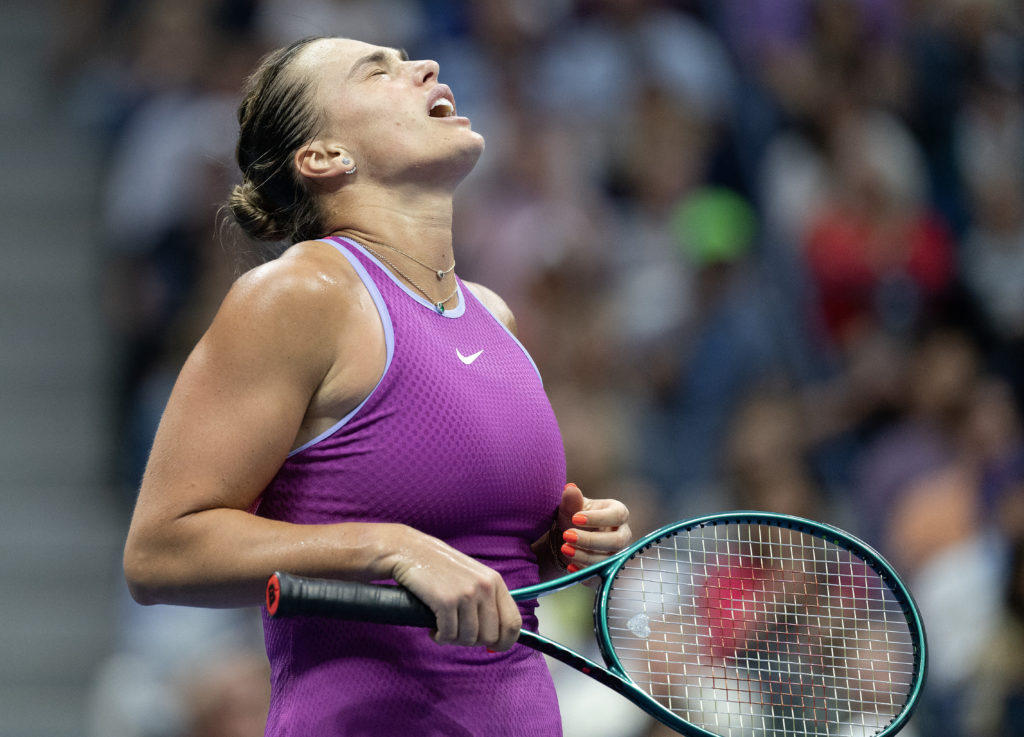
The eventual women’s champion Aryna Sabalenka managed to break an unwanted record with her fourth round US Open match, the latest to start in the history of the event.
The US Open were effectively breaking the very scheduling rules they were meant to introduce this year, with Jon Wertheim suggesting the US Open had a ‘real issue’ forming.
Former player turned coach Pam Shriver blasted the US Open’s ‘inhumane; treatment of players, when Donna Vekic, who Shriver coaches, and Qinwen Zheng’s night match finished at 2:15am. Andy Murray branded it a ‘total mess’.
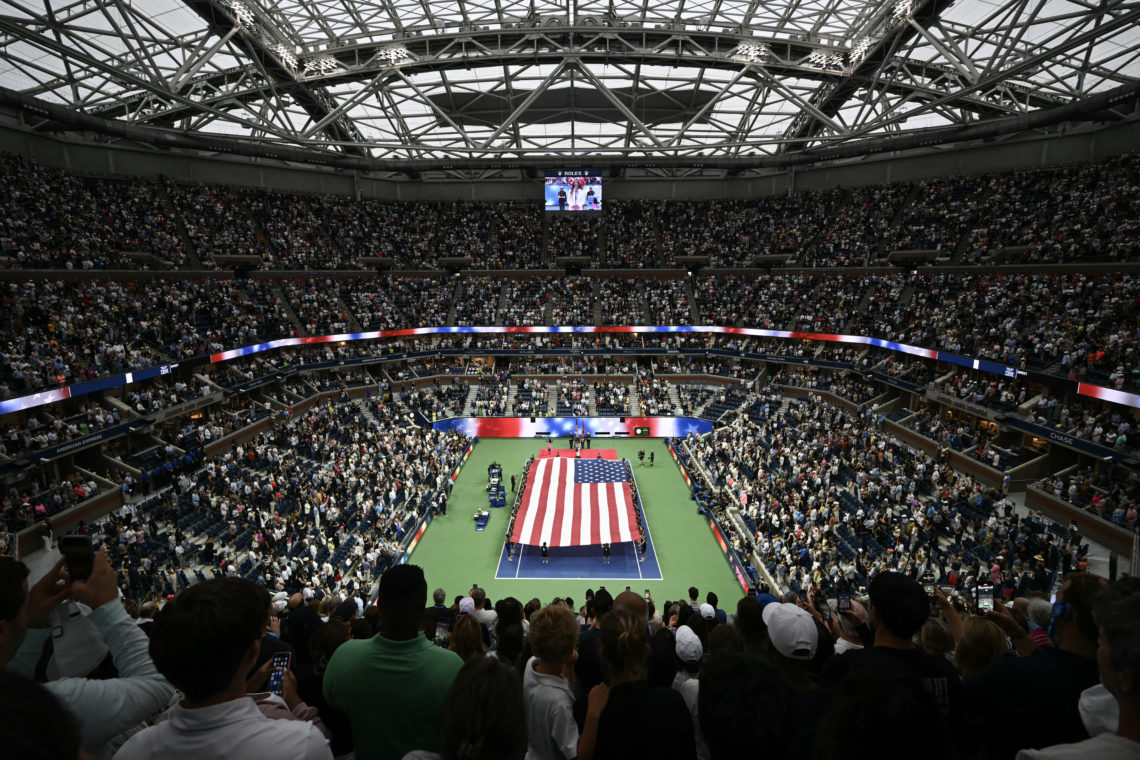
Allaster addressed the controversy on the podcast ‘Served’ with Andy Roddick: “On average it takes 50 to 60 minutes to clean Ashe – To clean it, to clear it, to get everybody out and get the next session safely in.
“On the night we had the Novak and Sabalenka situation it was 1:20 hour. We had to keep people outside the main gate because the grounds were fully at capacity,” she explained.
“You also want to make sure the fans who have been waiting for an hour didn’t walk in and the match was 30 minutes in. That’s what pushed that match to go on at 8:20.
With no straightforward solution to remedy these challenges, Allaster continued: “So what can we do? We looked at starting earlier on Ashe, we talked about it. We said about 11am, we have been there before and nobody is there.”
Roddick responded: ”To be fair when you were there before there were three matches, then you made it two matches but delayed the start an hour.
”Correct. That’s one possibility,” Allaster acknowledged. “It’s not going to totally solve it but it might help mitigate day running into night.
Allaster made clear that simply shifting the matches to earlier start time isn’t a viable option.
“We cannot start before 7pm, that’s an ESPN thing. We are not going to go to one match.”
Scheduling is not just a US Open issue
Novak Djokovic’s French Open withdrawal and subsequent knee surgery came soon after two marathon matches, with his five-set clash with Lorenzo Musetti finishing after 3am.
Night sessions have their own attraction, with the matches on Arthur Ashe especially having a unique electricity.
A sympathetic shrug can be given to Allaster, who is perhaps trying to find a solution to an impossible and unpredictable problem.
Shriver went as far to suggest a best-of-three format for the men, at least in the earlier rounds, to avoid the risk of lengthy matches dragging into the early hours of the morning.
However, at risk of sounding too cynical, it won’t be the last time the US Open and other Grand Slam events for that matter endure scheduling challenges.
Receive exclusive tennis news and updates twice a week to your mailbox