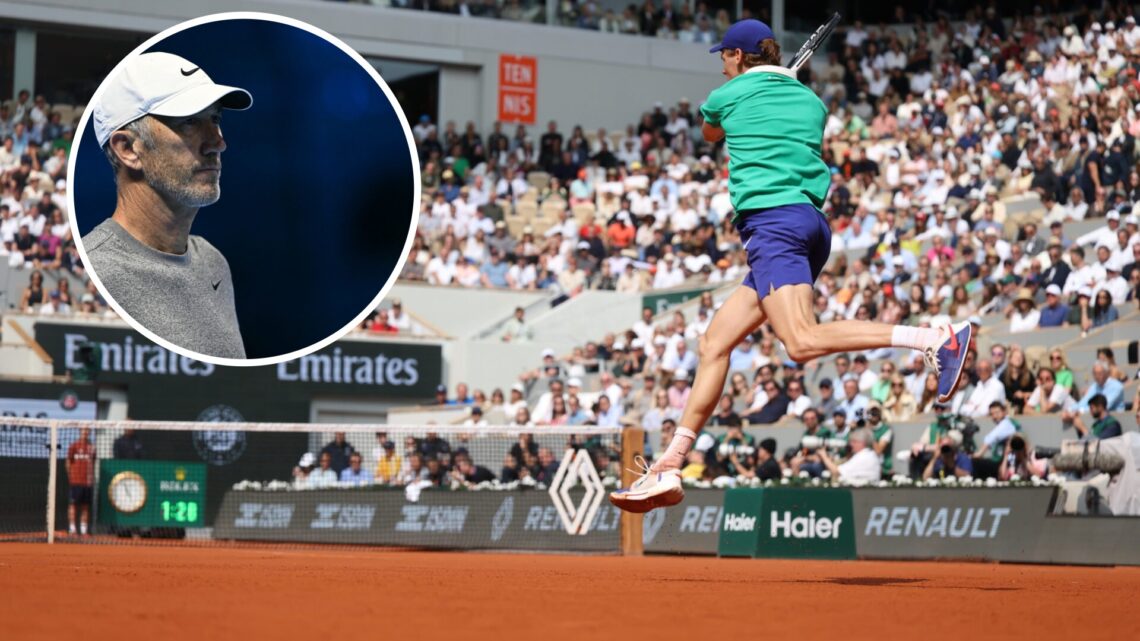

The coach of Jannik Sinner also had some success during his days as an active player on the ATP Tour.
Darren Cahill has coached Sinner since 2022, helping the Italian to become world number one and win three Grand Slam titles.
However, he will not be coaching his player for much longer, with Cahill set to step away from Sinner’s team at the end of the season.
For the time being, Cahill is fully focused on coaching reigning US Open and Australian Open champion Sinner.
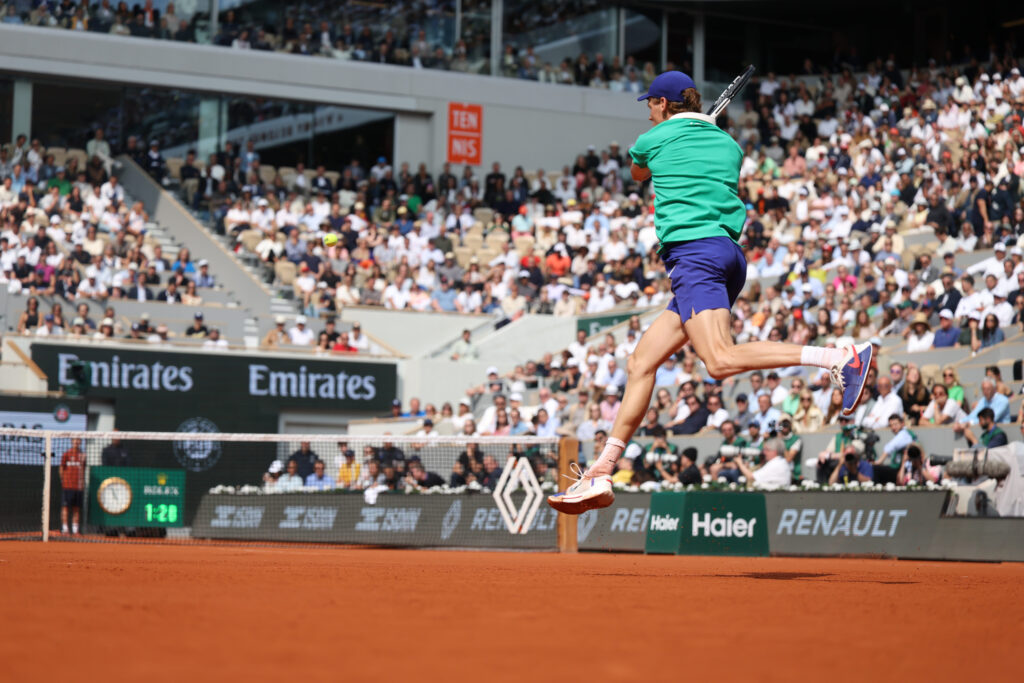
Darren Cahill pinpoints the two biggest changes in tennis since he stopped playing
Cahill is one of the most successful coaches on tour, winning Grand Slam titles with Sinner, Andre Agassi, Lleyton Hewitt and Simona Halep.
However, he also had a successful career as a player, winning two ATP titles and reaching a career-high ranking of world number 22 in singles and world number 10 in doubles.
In an appearance on the Served with Andy Roddick podcast, former US Open semi-finalist Cahill was asked about what he has noticed is different about tennis in 2025.
The Australian pinpointed two things in particular, highlighting the different racket technologies, as well as the physicality of players.
“The two biggest things that have changed in, especially men’s tennis, but also throw women’s tennis in there as well, is the technology has changed a lot.
“So, you are probably at the end of your career when that’s Luxilon came around and they started messing around with strings and racket technology and are able to generate a lot more power these days and with the string technology, they could get the bit more skin and once you get the ball with more spin, you can take a bigger swing at the ball and then you can open up more parts of the court as well, so you can make the court a lot bigger for yourselves.
“But the physicality has improved a lot. So these guys, with more years, more knowledge, more technology, more education, better coaching, better fitness training, better physios, the players now have bodies that they feel like, you know, if you’re a 23 year old, probably, you’ve got a 28, 29, physically ready body, whereas back in the day, 20, 30, 40 years ago, you didn’t mature until your body until you were much later, because of the fact you just didn’t put the building blocks in place at the early ages.
“So we were training the players a lot better these days, and more educated, especially in the physical training, way more educated in how to look after the body and make sure it recovers and you’re able to come back out and do it again the next day.
“I know when I was playing, I would have three or four days of really hard training. Then it would take me three or four days of rest just to recover. These guys don’t need to rest these days because they’re doing all the things that come back and keep building blocks and keep maturing and keep doing the better bodies. So the physicality has really changed.”
Darren Cahill explains what players can now do on all surfaces that was not the case before
Cahill was not done there when highlighting significant changes in tennis, as he also pointed out how differently players move on different surfaces in the modern game.
Clay was typically the only surface that was used for sliding, but Cahill explained that players are now capable of doing it on hard and grass as well.
“The other big thing also is the sliding, especially on the hard courts,” continued Cahill. “We’ve seen it on the clay all the time, but these guys now don’t care what surface you put play on. They’ve incorporated sliding into all their shots.
“So they’re getting in and out of the corners are much more efficient than what they used to be and gone pretty much of the days of the most elegant player that I think ever played on in Roger Federer, who rarely slid on grass. He had those two little quick steps to slow down and he put his full shoe on the ground, stopped there move the other way.
“These guys are just launching themselves into the corner on a full slide, making contact with the ball, and then in and out of that corner really fast. So the physicality has changed a lot and the way to move around the tennis court has certainly changed a lot as well.”
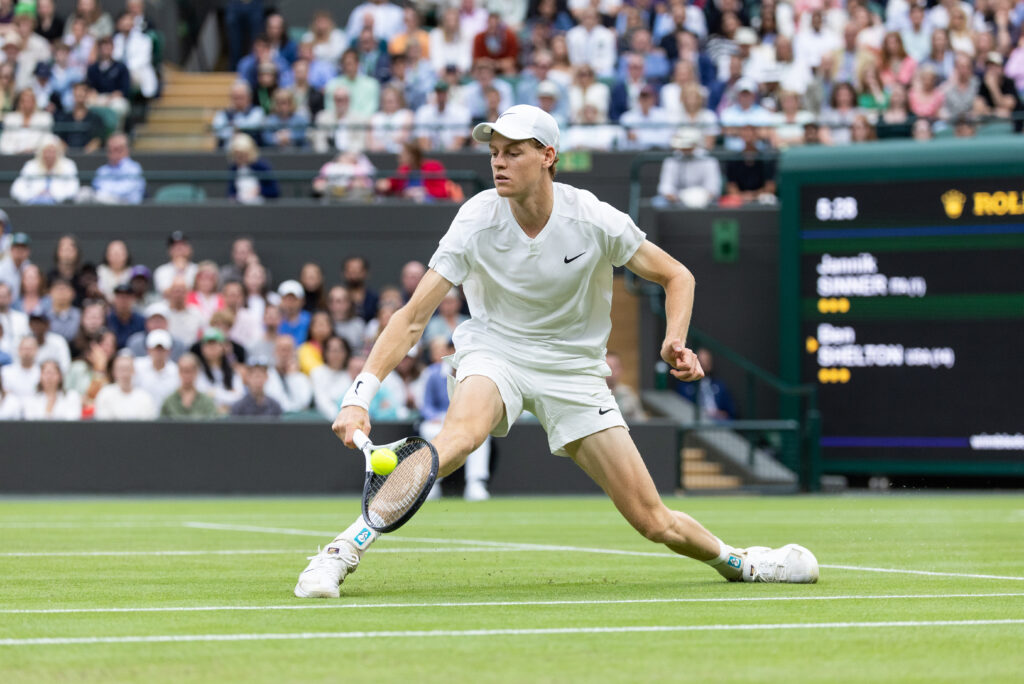
Wimbledon will be the next target for Cahill and Sinner, as he looks to move on from Roland Garros heartbreak.
Cahill is likely to be pleased with how the grass court season has begun for Sinner, who won his first match at the Halle Open against Yannick Hanfmann.
Receive exclusive tennis news and updates twice a week to your mailbox