

The tennis schedule has come under heavy scrutiny from top stars on the ATP Tour in recent months.
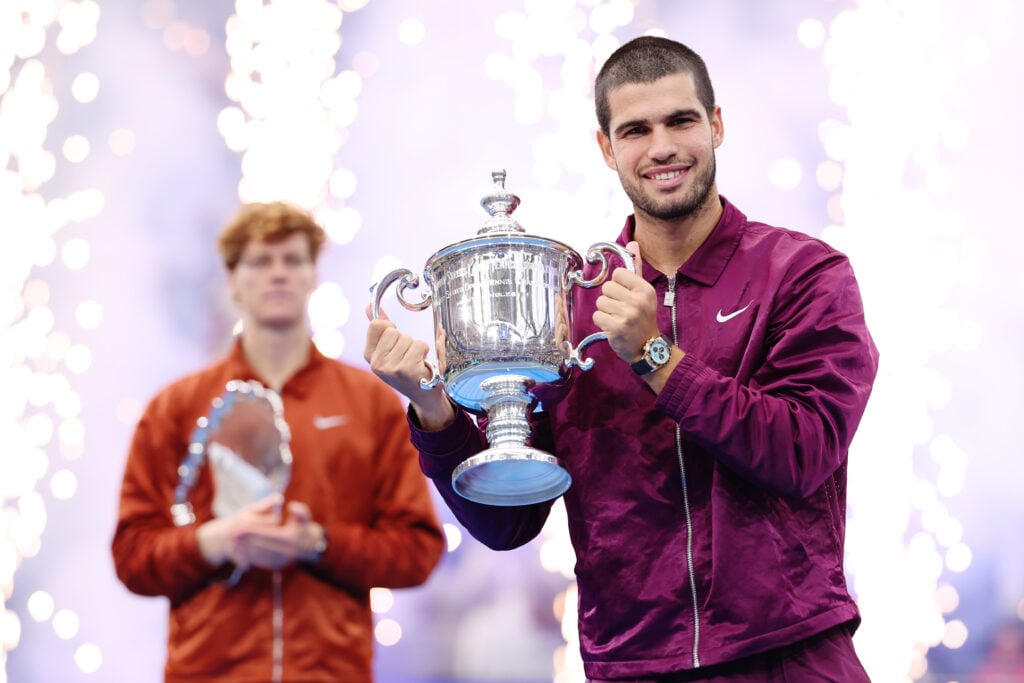
Year-end world number one Carlos Alcaraz criticised the calendar in September, claiming that the ATP are ‘killing’ players with workload.
Following Holger Rune’s Achilles injury, British number one Jack Draper weighed in on the issue, stating that changes need to be made to protect player health.

Taylor Fritz agreed with Draper, with the American star claiming he is seeing injuries and burnouts more now than ever before.
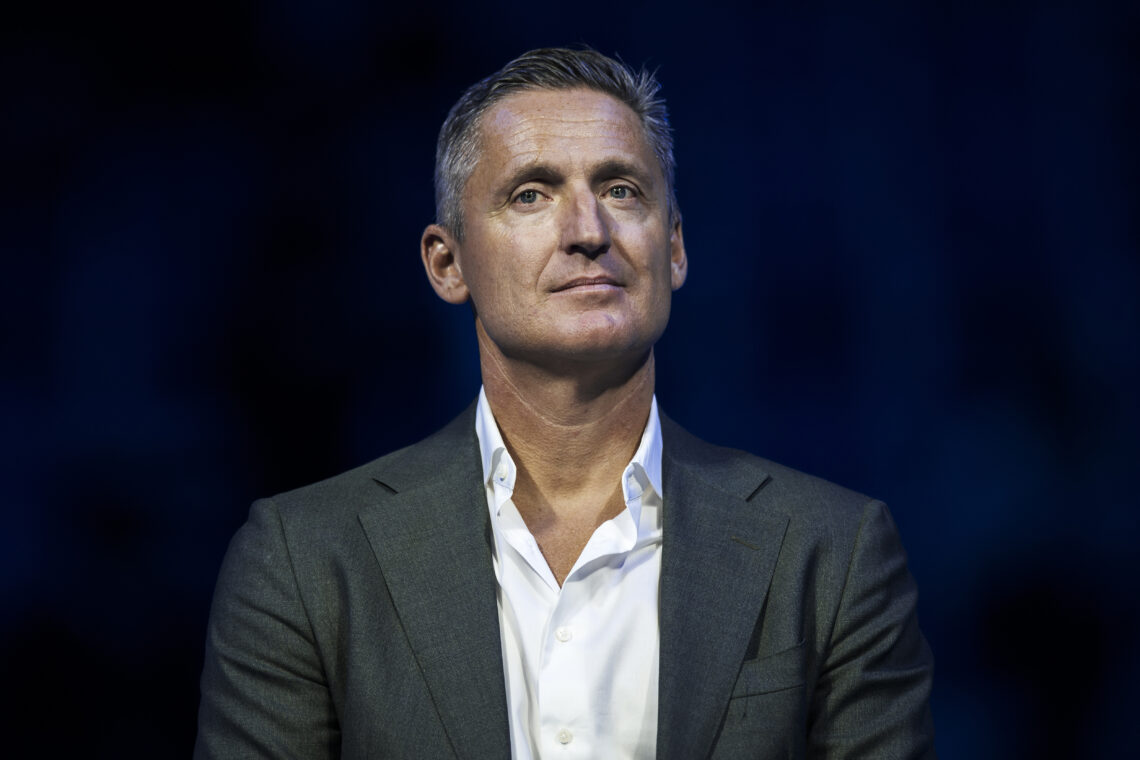
ATP Chairman, Andrea Gaudenzi, has now addressed these concerns and revealed he had sympathy for Alcaraz and Jannik Sinner.
Andrea Gaudenzi discusses issues around the ATP schedule
In a press conference at the ATP Finals, Gaudenzi was asked about potential changes to the tennis schedule in 2026.
The Italian former tennis player said: “I’ll start by stating the obvious that you all know, although we forget about it often.
“Tennis is a very, very, very difficult sport to schedule, probably the hardest, for a simple reason: it is direct elimination.
“Look, for example, in a Grand Slam or in a 12-day event, a player can play one match one day, or they can play seven matches over 12 days. You even look at golf, for example, the top 60 players, they play the 72 holes over four days.
Who will join Carlos Alcaraz and Jannik Sinner in a new ‘big three’?
“You have a cohort of players, the top 100, where you go from the top to the bottom, where you have Carlos and Jannik now playing around, I would say, 80 matches within 18, 20 tournaments.
“Then obviously the lower-ranked [players], they play 30, 35 tournaments, a lower amount of matches.
“You’re trying obviously with at least one calendar, but in reality, you have four, five calendars within one calendar. Half of the players lose first round, and 75% of the players are done by the second round.
“For most of them, it is a two or four-day event. For others, it’s a longer event. This is just to highlight the complexity of the calendar.
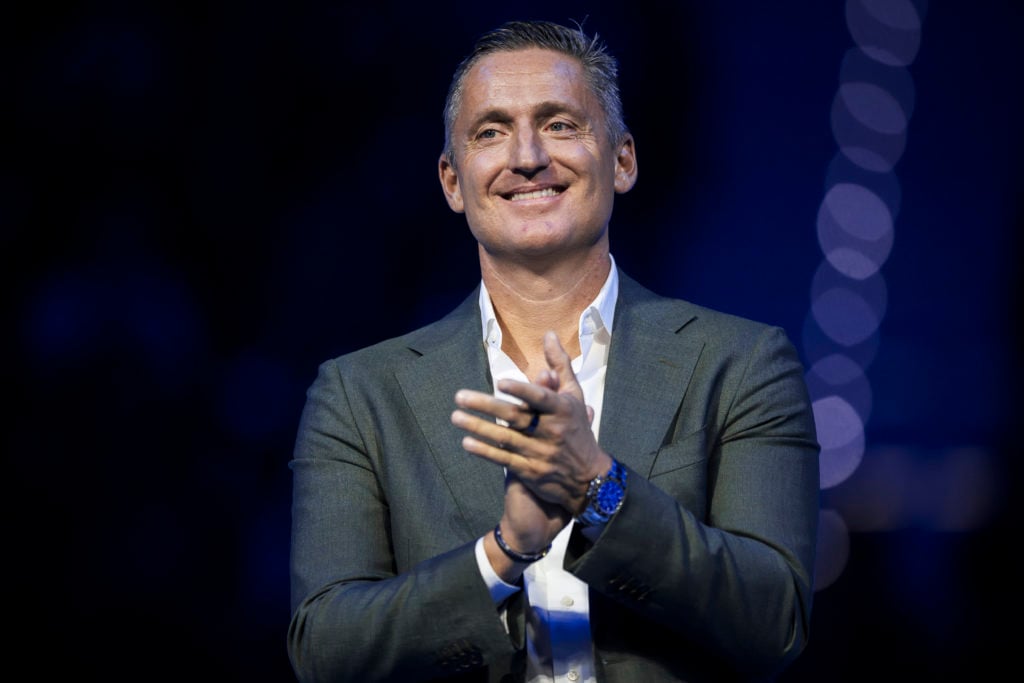
“Obviously, there are different cohorts of players saying it is too much. For others, if you remove, it becomes too less for the others because they need to play.
“If you lose, you have to go to another tournament and play more matches. That’s why we have the different tiers and categories: Grand Slams, Masters, 500 and 250.
“We try to balance it for all the cohorts of players, including challengers, because the challengers are also very important for the pathway and to build the champions of the future.
“About the 250s, in the last few years, we’ve had the strategy to reduce the number of 250s. We are from 38 down to, I don’t remember exactly the number, I think it’s 29.
“The target in our effort to optimise the calendar for 2028, when the new Saudi Masters will come on board, is to continue to reduce the number of 250s.”
It was recently announced that Saudi Arabia will host a brand new Masters 1000 event, likely to take place in the Middle East Swing in February from 2028 onwards.
Gaudenzi continued: “250s are very important, like challengers and 500. Every category is important. But we had a bit too many of them. It was really difficult to schedule within the calendar.
“We have two problems. The year has 52 weeks, and we’re not going to change that. The other thing is that players need an off-season. They need a proper off-season. At the moment, the off-season is a little bit too short.
- End of 2025 season: ATP Finals – November 16th
- Start of 2026 season: Brisbane International and Hong Kong Tennis Open- December 30th
“You sometimes need to be able to rest, take a holiday, rebuild your body, restart practicing tennis, then you move into the Australian season.
“On top of that, we add in the complexity that we have seven entities participating in this effort. The four Grand Slams are individual. They have their own dates. Then you have the ITF with the Davis Cup format that has been changing quite a bit in the last few years. You obviously have the ATP and WTA.
“If you think about the overall picture, I have sympathy from a player standpoint. You’re dealing with seven entities that are managing a calendar, but in reality, there are seven boards making decisions.
“So it’s difficult to actually have a streamlined effort, which is at the core of my plan, the One Vision Plan, where you try to unify the governance and have somebody trying to come up with an ideal or next-best option of an ideal calendar, which is definitely more streamlined.

“Overall, I think our strategy has been clear to focus on the on the premium product, which is the Masters. The reason for that is very simple: we need to provide the best possible experience to the fans.
“The fans love to watch the best players in the world playing against each other in the best events. Those moments, the four Grand Slams, the Masters, and the Finals, are the moments we all get to see the best players playing against each other.
“Then obviously you have the 500 and 250 that, for those players that play fewer matches in the Grand Slam and the Masters, they need to play down and play to continue to keep their level up and improve.
“It’s complicated. I have sympathy, for example, Carlos and Jannik, who have been getting to the finals of every slam, playing very well at the Masters.
“For those players at the very top making so many points, it’s probably very difficult to play a full calendar.”
Andrea Gaudenzi says tennis would be better off with ‘one governance’
Guedenzi then said: “Another problem that we have in our system, it is an open system. Players are independent contractors.
“We have a calendar, but technically, a player can choose where to play. They can prioritise a 250 over a 500, they can prioritise a 500 over a Masters.
“We have rules that are related to the incentives, to the rankings, we try to influence their behaviour. But ultimately, a player chooses where to play.
“It’s a difficult problem to solve because if a player is attracted by money and plays in a lower category, which happens often, if you look at the data and the behaviour of how they play, they often play a lot also in the lower categories, and they also play exhibitions outside of our system, and they play team events.
“It’s a complex problem to solve. I don’t think there is one solution that fits all. It’s definitely something that I believe strongly, that if everyone were around the same table, Grand Slams, ATP, WTA, ITF, in one room, one board, one governance, I think we would definitely do a much better job than what we are doing today.”
Gaudenzi has been the Chairman of the ATP since 2020, having been elected 17 years after retiring from professional tennis.
Receive exclusive tennis news and updates twice a week to your mailbox