
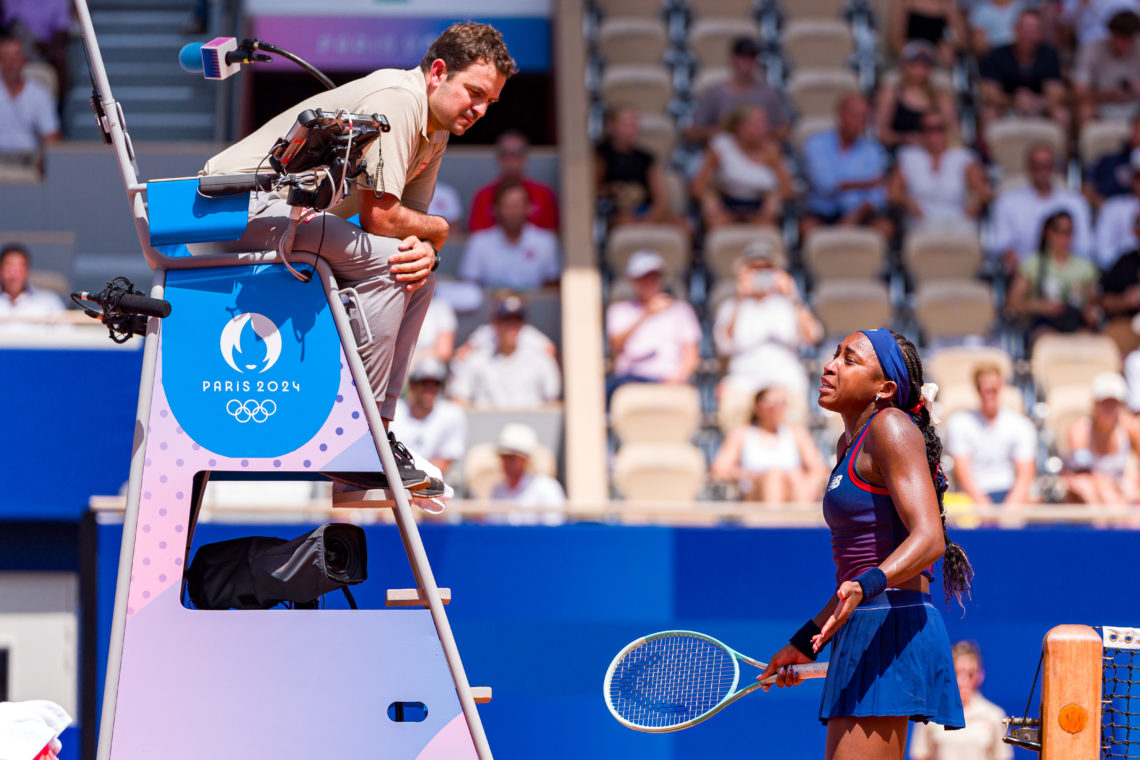

Tennis players are increasingly finding themselves on the back pages of newspapers not just for their athletic prowess but for their on-court outbursts, many of which are directed at umpires.
These incidents, which often escalate into heated arguments and even tantrums, could largely be mitigated by the introduction of VAR technology into tennis.
This rule will be trialed again in the upcoming US Open later this month and comes at a desperate time for players and officials alike.
During her Olympics third-round match, Coco Gauff felt as if there was an agenda against her as she burst into tears over a disagreement with the umpire over whether an ‘out’ call affected her subsequent shot or not.
However, footage later emerged to show that the world number two was wrong on that particular occasion.
A week later, in the Washington semi-final, Denis Shapovalov was defaulted from his match against Ben Shelton for allegedly directing foul language at a spectator, but he later won the appeal to have his prize money and ranking points reinstated.
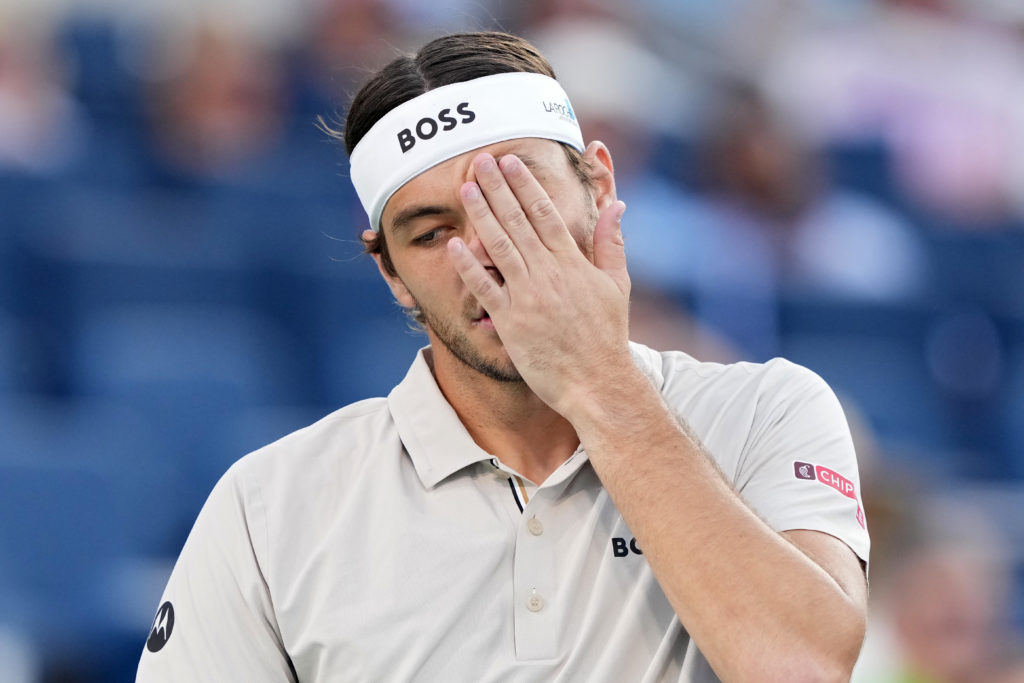
Now this week, more major controversy ensued as Taylor Fritz found himself on the wrong side of an umpire’s error.
The margin for human error in officiation must be reduced
All three of the above situations, whether it was the player or the umpire who was in the wrong, could have been mitigated if there had been video review available on the ATP and WTA Tours.
Its introduction would bring much-needed clarity to players, umpires, referees and everyone else involved in the game.
By providing an objective review of questionable decisions, it would eliminate doubt and confusion, ensuring that all parties can trust the accuracy of the calls.
This added transparency would not only help maintain the integrity of the sport but also reduce the frustration and disputes that arise from contentious rulings.
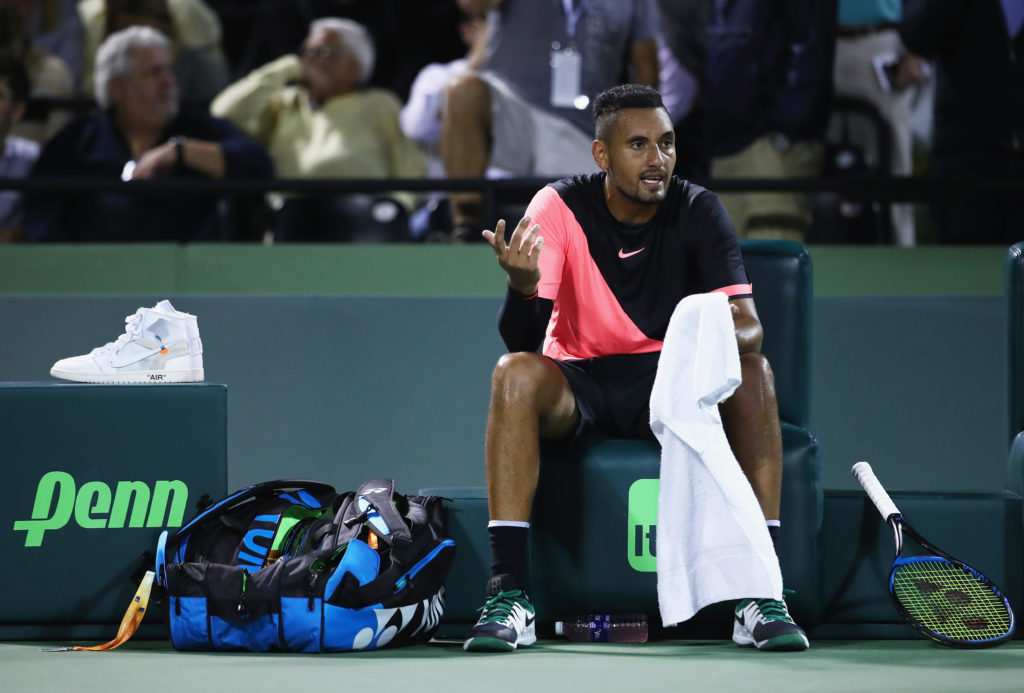
Take Nick Kyrgios, for instance – a player whose talent is often overshadowed by his volatile temperament.
His infamous spats and tantrums have earned himself headlines and hefty fines, but they also raise a crucial question: how much of this frustration stems from perceived injusticies on the court?
While Kyrgios’ behavior is his own responsibility, one can’t help but wonder if some of his outbursts could have been avoided if the margin for human error in officiation were reduced.
Major incidents that could have been avoided with VAR
The introduction of video review in tennis could have prevented several controversial moments that have left players and fans questioning the fairness of officiating.
Here are three notable incidents where VAR could have made a difference:
Serena Williams vs. Kim Clijsters, 2009 US Open semi-final
Williams was penalized for a dubious foot fault at a critical point, handing Clijsters two match points, leading to an outburst that resulted in her being defaulted from the match.
Roger Federer vs. Tomas Berdych, 2012 Madrid Open final
The infamous incident that gave birth to the viral video of Federer giving the scientific explanation of why his ball must have bounced twice before Berdych got it.
Astra Sharma vs. Giulia Gatto-Monticone, 2021 Copa Colsanitas first round
Sharma was robbed of the third game in the deciding set of this WTA clash when an umpire called the score incorrectly and the Australian subsequently lost the match.
Receive exclusive tennis news and updates twice a week to your mailbox