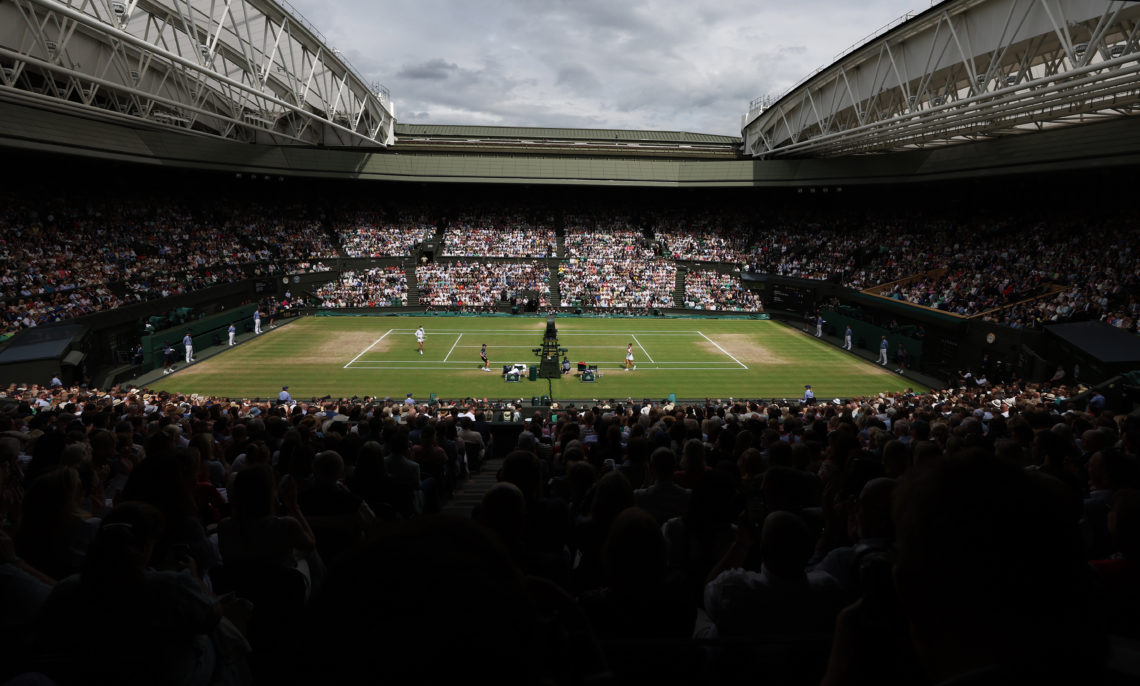

Wimbledon is so far away on the horizon, and yet it has now made a huge call which will certainly dominate headlines, at least for a little while.
After all, we are deep into the Asian swing of the tour now, with the women currently competing in Wuhan, whilst the men are seeking to claim success in the Shanghai Masters.
Without a Grand Slam to think about for another three months, many would be forgiven for expelling such elite events from their thinking.
However, England’s paramount tennis competition is now set to make a chance that cannot be ignored.
Wimbledon to abolish line judges
This fresh alteration is detailed in The Times’ latest article, as they have revealed Wimbledon’s plans for the 2025 tournament which will end a 147-year tradition.
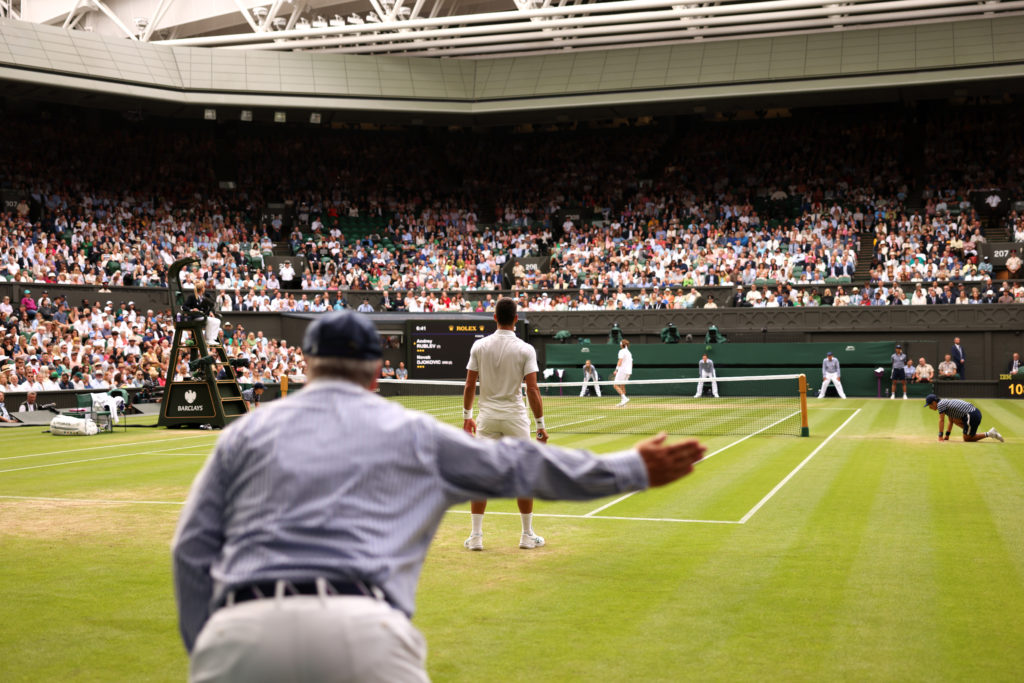
The report reads: ‘Wimbledon has abolished the use of line judges next year, replacing human officials for the first time in the 147-year history of the championships with artificial intelligence.
‘There had been some initial reluctance at Wimbledon to end a longstanding tradition by switching to ELC, but organisers have finally come to the conclusion that the high standards of the championships could be compromised by persisting with human line judges. ELC is widely considered to be a more accurate officiating system that the sport’s top players are now well accustomed to.
‘This is essentially a wider upgrade of the Hawk-Eye challenge system that has been in use at Wimbledon since 2007. Players were allowed to call for unlimited electronic reviews of any disputed calls during a set as long as they had not made three incorrect challenges.
‘From next year the challenge concept will be ditched, as automated voice calls will be heard within a tenth of a second of the ball landing out. Several cameras are used to track the trajectory of the ball during rallies, with a separate video operator sitting off the court in a room to oversee the process. The chair umpire will remain the leading official on the court.’
Practicality must trump tradition eventually at Wimbledon
As frustrating as it may be to some traditionalists, who love the fact that Wimbledon remains so steeped in history, this was a change that always felt like it was just around the corner.
After all, there is simply too much at stake, both financially and more, for these decisions to now be left to the human eye.
Especially after all the controversy that has emerged in the past week regarding officiating, with Stefanos Tstsipas fuming at an umpire in the Shanghai Masters, joining Carlos Alcaraz, Frances Tiafoe and Daniil Medvedev as the latest disgruntled player.
The people who take these positions are impressively sharp in what they do, but the chance that they could make one bad call which might dramatically alter the trajectory of a match is too big a chance to take.
It’s a sad but necessary change for tennis’ most famous tournament.
Receive exclusive tennis news and updates twice a week to your mailbox