
Roger Federer didn’t lose to many players during his legendary tennis career.
Winning 82% of the matches he played on the ATP Tour, Federer only lost 275 times in his 24-year career.
A significant portion of those defeats came against his ‘big four’ rivals: Novak Djokovic (27), Rafael Nadal (24), and Andy Murray (11).
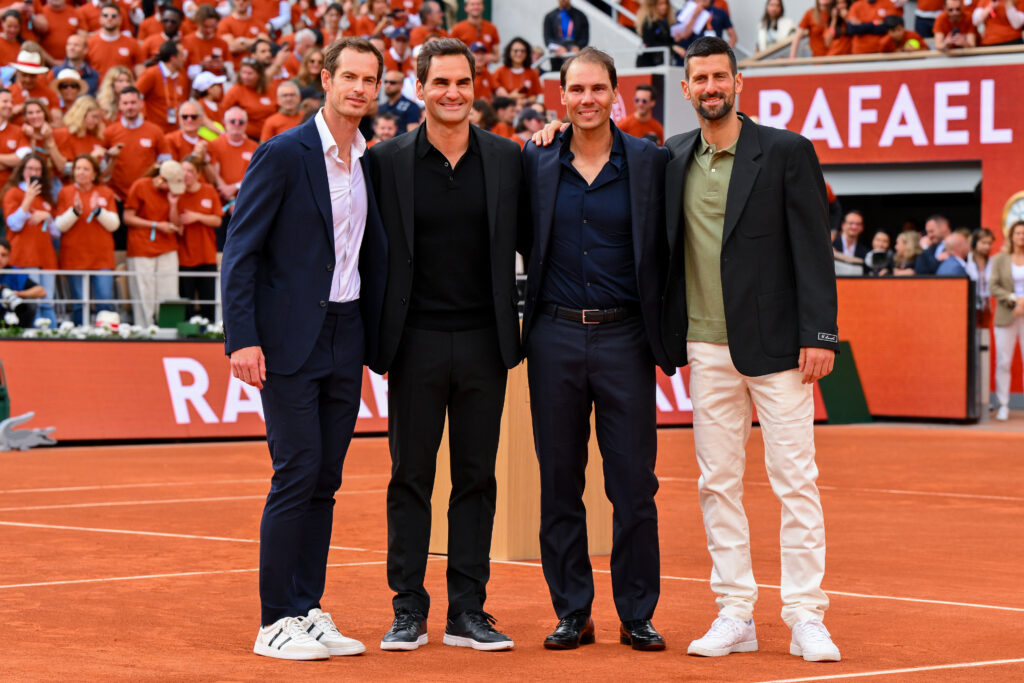
However, every once in a blue moon, Federer would come up short against a lower-ranked player on tour.
Back in 2014, Federer lost to a world number 17 with one of the ‘weirdest forehands’ in tennis history.
Roger Federer lost to the player with the ‘weirdest forehand’ – Ernest Gulbis
At the 2014 French Open, Federer took on Latvia’s Ernest Gulbis for a place in the quarterfinals.
Seeded fourth in Paris, Federer was expected to make light work of Gulbis, but things certainly didn’t pan out that way.
In five sets, Gulbis defeated Federer, 6-7, 7-6, 6-2, 4-6, 6-3, knocking the then 17-time Grand Slam champion out of the tournament.
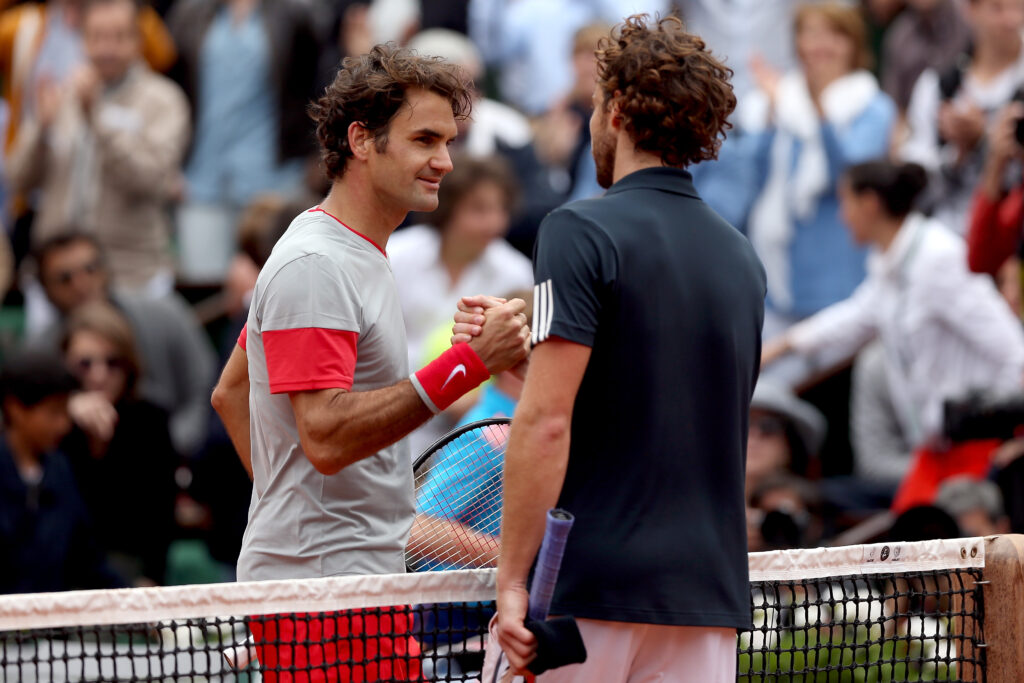
Speaking on Instagram recently, Serena Williams’ former coach, Patrick Mouratoglou, shared his thoughts on Gulbis and his unique forehand.
“This player beat Roger Federer at Roland Garros and actually had a great career, with probably one of the weirdest forehands in the history of the game,” he said.
“His forehand was his weakness, but still, he managed to keep the ball in play and managed to find a way to direct the game to his backhand most of the time.”
The Frenchman proceeded to highlight the ‘technical problems’ with Gulbis’ forehand.
“I see a few technical problems. The first technical problem is his left arm, because he’s supposed to point at the ball, and it’s pointing extremely high. It was difficult to keep a good balance with the arm so high, that’s the first thing,” said Mouratoglou.
“The second that is obvious, is the right arm. The arm that holds the racket. As you can see, his arm, when he prepares, is fully extended, which is a really a problem for several reasons.
“First of all, from a fully extended position, when you have to come back fast, it’s difficult. It takes much more time than if your arm is bent.
“So when the balls were going faster, and you can see it on the video, because he was late, his contact point was too far back, which creates other problems.
“Secondly, from that position over there, to use the hand well, to accelerate your racket head, to have the whip effect from that position is very difficult. And as you can see, when he is in contact with the ball, his wrist is quite locked; you cannot really use the hand.
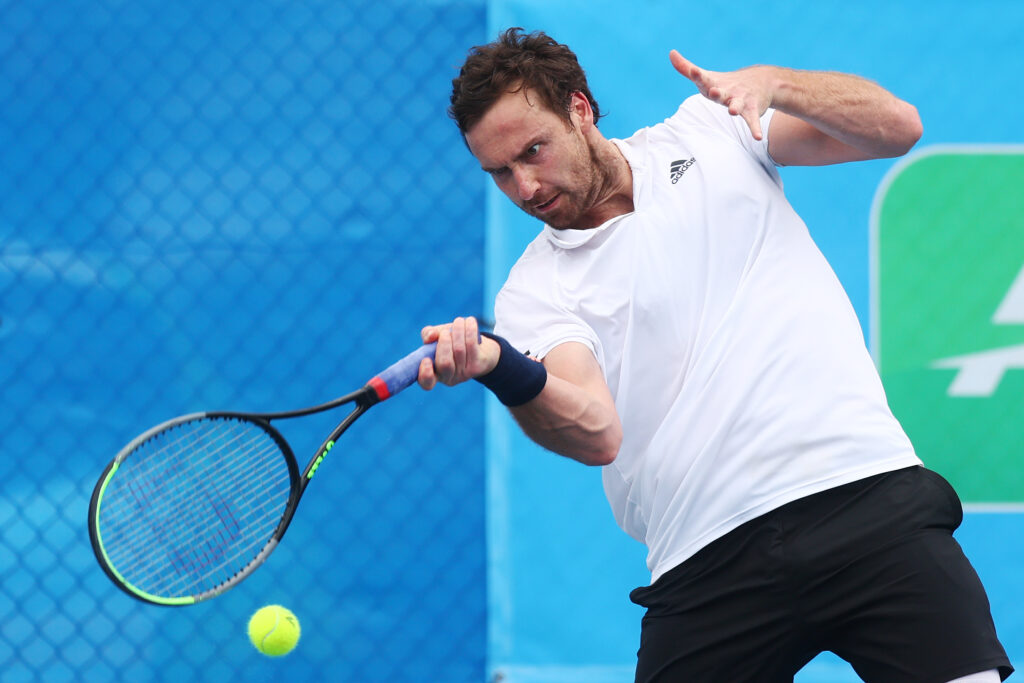
“When you don’t use your hand, it’s much more difficult to find angles, it’s more difficult to generate spin, and it’s more difficult to find acceleration. So, that’s basically most of the problems that I see in his forehand.”
Mouratoglou did, however, credit Gulbis for maximising his potential, reaching a career-high of 10th in the world.
“This guy was top 20 [actually top 10], and again, beat Roger in Roland Garros, which shows that he had a lot of other incredible qualities, he had a huge serve, unbelievable backhand, good movement, and good dropshots,” he said.
“So even if you have a big weakness… of course, to be number one in the world, it will not be possible, but you can always manage with your qualities, and you should focus more on developing your qualities, so that you can reach your best potential and fulfill your potential.
“In the case of Ernest Gulbis, I think he fulfilled his potential really well.”
Gulbis certainly reached his potential, winning six ATP titles and reaching the semifinals of the French Open in 2014.
But what is the Latvian doing now?
Ernest Gulbis played his last match in 2023
The 37-year-old played his last professional match two years ago at the Davis Cup, winning his singles tie in Latvia’s 3-2 defeat to Israel.
While he has yet to officially retire from tennis, it seems unlikely that Gulbis will return to the professional tour.
Since September 2022, Gulbis has served as president of the Latvian Tennis Union, a role that takes up the majority of his time.
Latvia doesn’t currently have a player ranked inside the top 300 on the men’s tour, while Jelena Ostapenko, the world number 23, is the highest-ranked Latvian woman.
Gulbis will no doubt hope to see more players from his country make a charge towards the top of men’s and women’s tennis during his tenure as Latvian Tennis Union president.
Receive exclusive tennis news and updates twice a week to your mailbox