

The final ATP Masters 1000 event of the season in Paris is just around the corner as the season enters its latter stages.
Defending champion Alexander Zverev has been handed a tough draw this year, with world number two Jannik Sinner and Ben Shelton in his half.
Carlos Alcaraz will look to finally enjoy a successful campaign in the French capital, having failed to advance past the quarterfinals in each of his four previous appearances.
Some big names have already withdrawn from the Paris Masters, including Novak Djokovic, who announced he hopes to return next year.
Former world number three Stefanos Tsitsipas also pulled out of the event and appears to have ended his season amid injury struggles, joining a growing list of stars to call a halt to their 2025 campaigns.
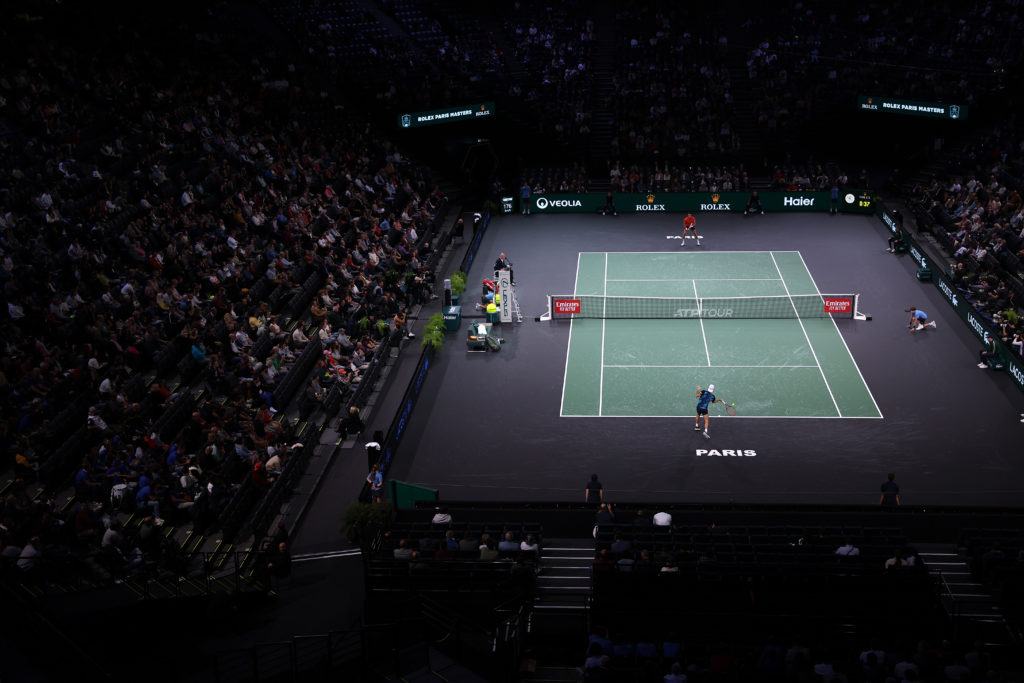
The recent flurry of injuries has seen the ATP come under heavy criticism around the packed schedule and slow court speeds, the latter of which Cedric Pioline, the Paris Masters tournament director, addressed ahead of the event.
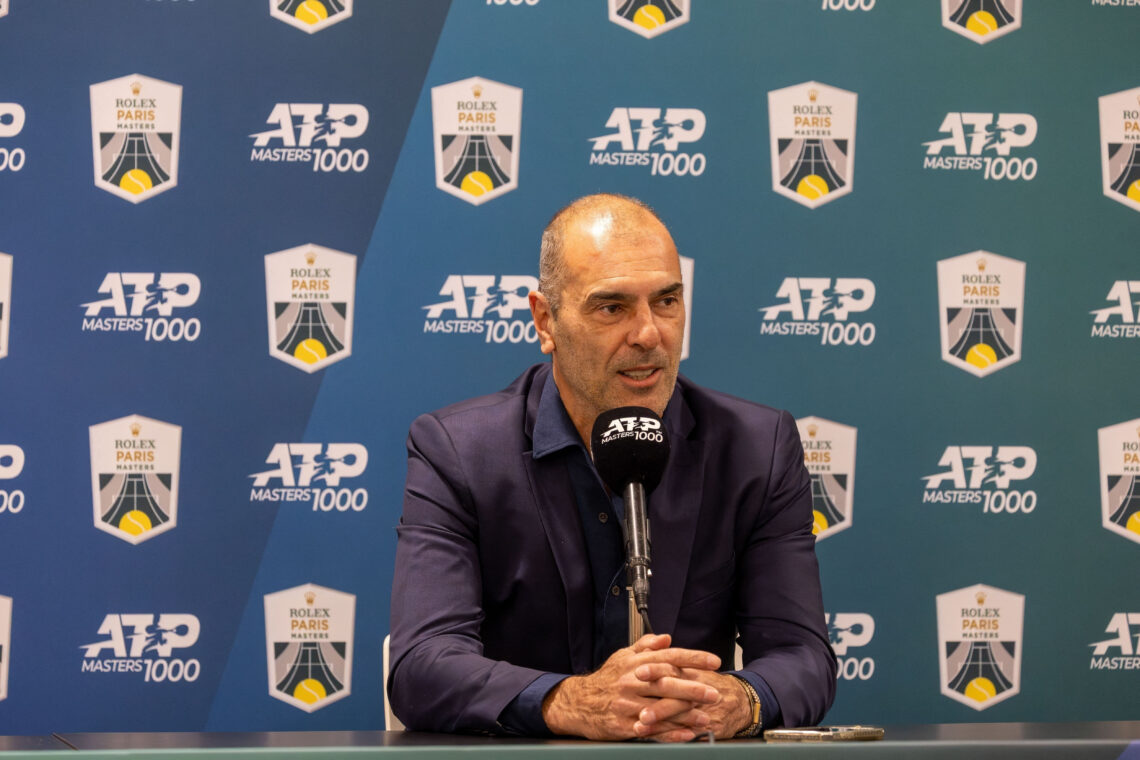
Cedric Pioline discusses recent concerns around slow court speed
In his pre-tournament press conference, Pioline was asked about the early feedback he had received from players who took to the practice courts before the event began.
The Frenchman responded: “We are very much listening to everyone’s feedback. We’re trying to sort out what we can do.
“The competition hasn’t started yet. We’ve had a few complaints from players who do not perform well. We also managed to sort out what we can do and what we shouldn’t do.
“The surface is slower than last year. They have noted that. They have seen that. But it was our desire to make it slower, as well. They seem to be satisfied. We see that the players are quite satisfied. It is important for us.”
Roger Federer recently sparked the debate around the court issue, suggesting that the ATP was slowing the court speeds down on the tour to help Alcaraz and Sinner.
Federer’s sentiments were echoed by Zverev, who went as far as to say he ‘hates’ the changes being made to the surfaces.
Pioline said: “There’s never a consensus, as you know. Not every player has the same opinion. So we tried to reach the widest consensus possible amongst as many players as possible.
“It has been standardised recently, if we take into account the indoor, the grass and the clay. Some are satisfied. Some are less satisfied. We try to listen to everyone.
“We also listen to the ATP’s feedback because this tournament is organized by the ATP. We speak with tour managers, as well, and organisers.
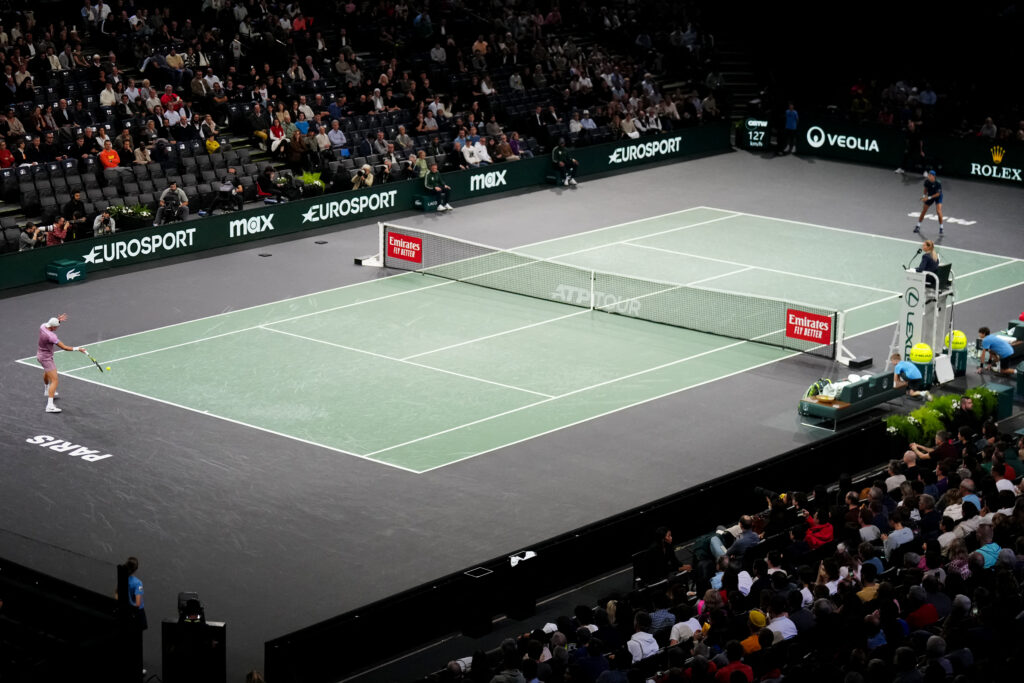
“The feedback we got from 2024 was that it was too fast a court. We tried to adjust, to change. We’ll see if we managed to find the right speed for this edition.
“We also have a surface with resin that is actually getting smoother as we play. From before the beginning of the tournament until 10 days after, there’s a real difference. We’ve made measurements.”
The Paris court speed is designed to align with the ATP Finals
The Paris Masters takes place two weeks before the year-end ATP Finals, which begin on the ninth of November and end on the 16th.
Piolini revealed that the change in court speed in Paris was also to align with the conditions in Turin, explaining: “Players actually need to have similar court conditions for those who are concerned, of course.
“ATP Finals is the last tournament. It’s a very important tournament for them. So we try to have a speed that would be most suitable for as many types of play.
“Generally, surfaces have slowed down, actually, all throughout the year now.”
The main draw of the Paris Masters begins on Monday, the 28th of October.
Receive exclusive tennis news and updates twice a week to your mailbox