
The first few rounds of Wimbledon were treacherous for the seeds, as a record number of players suffered shocking defeats.
It wasn’t a good tournament for the big names at Wimbledon as eight top-ten seeds were eliminated in the first round.
On the men’s side, Alexander Zverev [3], Lorenzo Musetti [7], Holger Rune [8], and Daniil Medvedev [9] were all stunned in round one.
There were four more shocks on the WTA Tour, as Coco Gauff [2], Jessica Pegula [3], Qinwen Zheng [5], and Paula Badosa [9] were all beaten.

Setting an Open Era record, the seeds failed to impress in round one and continued to fall in rounds two and three, setting up an intriguing second week at Wimbledon.
One top WTA coach has now offered the ‘only explanation’ as to why so many big names have struggled on the grass.
Patrick Mouratoglou says the short turnaround between Roland Garros and Wimbledon causes upsets
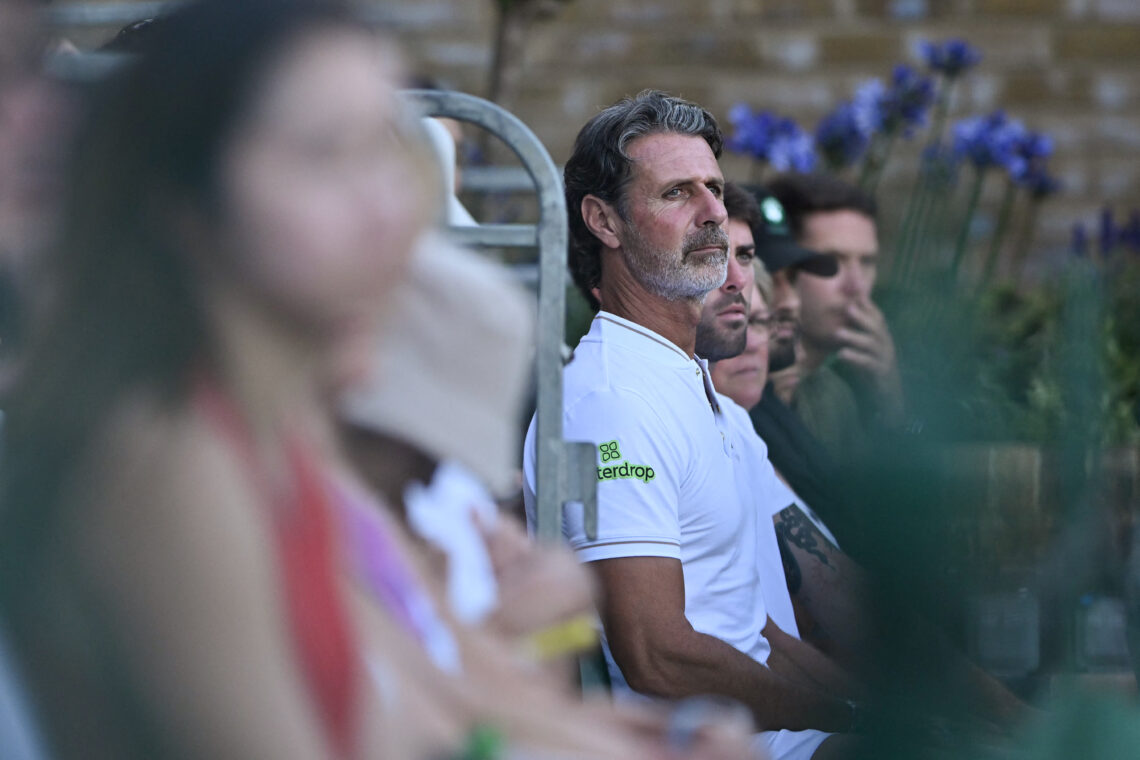
On Instagram, Naomi Osaka’s coach, Patrick Mouratoglou, explained why there have been so many upsets at Wimbledon in 2025.
“The only explanation that makes sense is the fact that you don’t have enough time between two Grand Slams,” said Mouratoglou.
“The top players that go far at Roland Garros, the first week of tournaments on grass, they don’t play.
“They just start to practice, maybe for half a week. They need time to rest, also a Grand Slam is exhausting. Even more on clay, they need to rest. Three weeks is not enough, for sure.
“It’s systematic that Wimbledon brings so many surprises in terms of top players getting beaten in the first or second rounds. Even though this year is more than usual, it’s still happening every year.
“It doesn’t happen in the other Grand Slams. Of course, there are always one or two top guys who lose early, but so many in the first round, that’s crazy.”
| Seed | Name | Performance |
| 1 | Jannik Sinner | Third round* |
| 2 | Carlos Alcaraz | Fourth round* |
| 3 | Alexander Zverev | Lost in 1R to Arthur Rinderknech |
| 4 | Jack Draper | Lost in 2R to Marin Cilic |
| 5 | Taylor Fritz | Fourth round* |
| 6 | Novak Djokovic | Third round* |
| 7 | Lorenzo Musetti | Lost in 1R to Nikoloz Basilashvili |
| 8 | Holger Rune | Lost in 1R to Nicolas Jarry |
| 9 | Daniil Medvedev | Lost in 1R to Benjamin Bonzi |
| 10 | Ben Shelton | Third round* |
The Frenchman proceeded to explain why players find it particularly difficult transitioning from clay to grass courts.
“They spend so little time on grass every year. It’s not a surface they know well. I mean, clay, at least you spend two months a year. Grass, some players spend three weeks,” said Mouratoglou.
“To master a surface, it takes time; to understand all the subtle things about the surface is completely different.
“The switch between clay, where the bounce is very high and you’re sliding, compared to grass, where the bounce is low and potentially extremely low when the players play flatter or slice, where the ball accelerates, when it touches the ground, where you’re not supposed to slide, but make a lot of little steps, where the service is so important.
“It’s crazy to have so little time to get used to those conditions. You always find out that the players who have the most naturally adapted game to grass are the ones performing.”
Mouratoglou also highlighted the mental challenges players face competing at Wimbledon straight after the French Open.
| Seed | Name | Performance |
| 1 | Aryna Sabalenka | Fourth round* |
| 2 | Coco Gauff | Lost in 1R to Dayana Yastremska |
| 3 | Jessica Pegula | Lost in 1R to Elisabetta Cocciaretto |
| 4 | Jasmine Paolini | Lost in 2R to Kamilla Rakhimova |
| 5 | Qinwen Zheng | Lost in 1R to Katerina Siniakova |
| 6 | Madison Keys | Lost in 3R to Laura Siegemund |
| 7 | Mirra Andreeva | Third round* |
| 8 | Iga Swiatek | Third round* |
| 9 | Paula Badosa | Lost in 1R to Katie Boulter |
| 10 | Emma Navarro | Third round* |
“There is also a mental component, because a Grand Slam, as I said, is exhausting,” he said.
“When you played well, when you went far, you are completely empty. So you need to recharge the batteries, and you need to completely reset for a new goal that is almost happening right away.
“You feel that urge to be immediately performing at your highest, because it’s a Grand Slam.”
The quick turnarounds between the Grand Slams are tricky for players, although there doesn’t seem to be a simple solution.
Patrick Mouratoglou can’t think of a solution to the ‘crazy’ Grand Slam calendar.
Sharing his thoughts on the calendar, Mouratoglou claimed it’s ‘crazy’ as he pointed out how three Grand Slam events are crammed into the summer.
“The whole year, the calendar is strange. You have a Grand Slam in January, and then you have three Grand Slams between basically June and August,” he said.
- Australian Open (January)
- French Open (May/June)
- Wimbledon (June/July)
- US Open (August/September)
“The concentration is crazy.”
While Mouratoglou agrees the calendar is ‘strange’, he can’t think of a solution to the problem.
“Maybe we could think, Roland Garros could happen earlier, no, it’s too cold, it’s too rainy in Paris. So, you can’t,” he said.
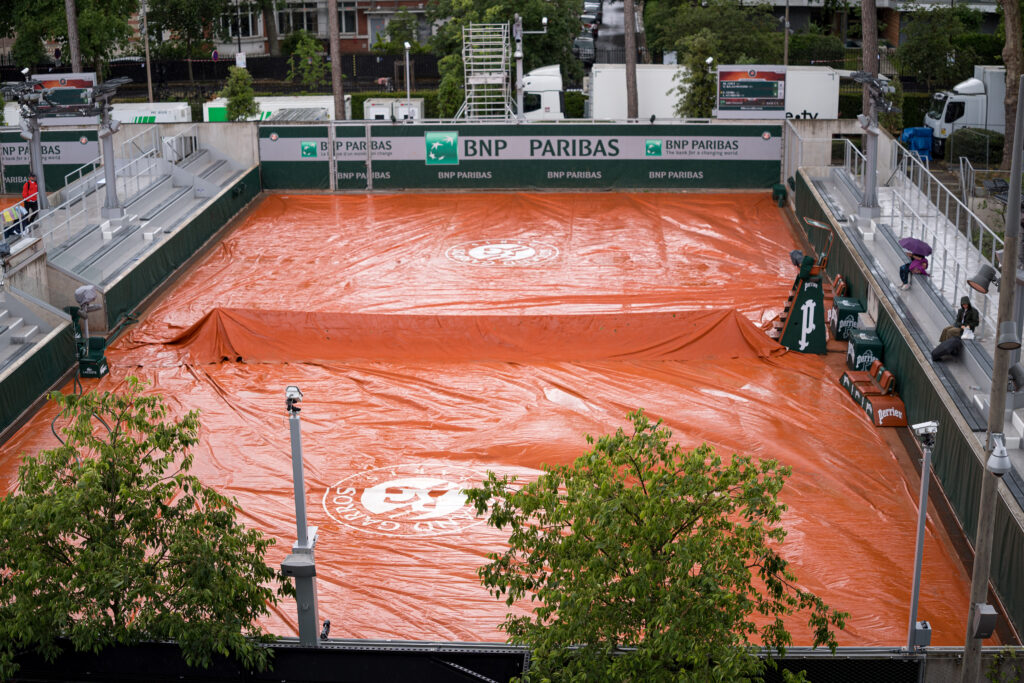
“Then Wimbledon, if you push Wimbledon, then you have to push the US Open, and it’s September, it’s too cold also, and potentially more rainy in New York, so you can’t move them.
“The fact that it happens in the summer, those three tournaments, is because of the weather conditions, and there is no other option.”
With that being the case, the likelihood is that the Grand Slam calendar won’t change, and we will continue to see big names fall every year during the opening rounds at Wimbledon.
Receive exclusive tennis news and updates twice a week to your mailbox