
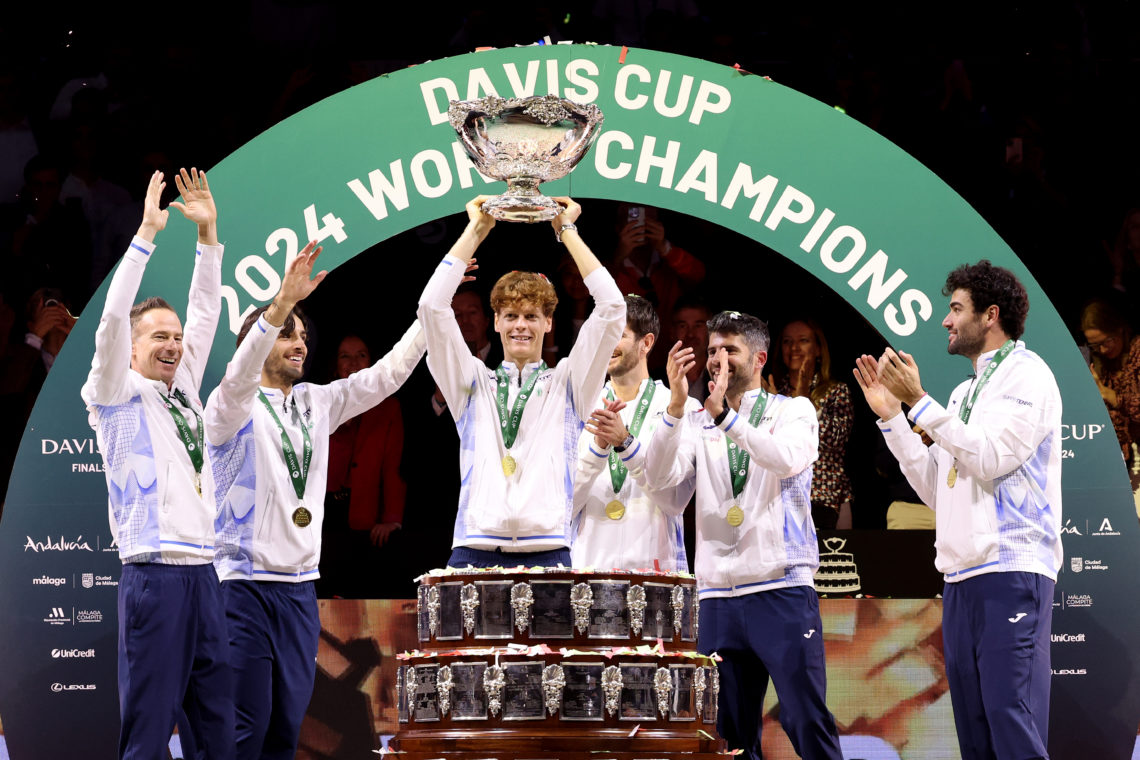

Jannik Sinner and Jasmine Paolini led Italy to an unforgettable double, securing both the Davis Cup and Billie Jean King Cup titles in 2024.
This marked Italy as only the fifth nation in history to claim both prestigious team trophies in the same year.
Jannik Sinner and Matteo Berrettini secured victory over the Netherlands’ Tallon Griekspoor and Botic van de Zandschulp in the Davis Cup final, capping off an extraordinary season for Italian tennis.
Sinner became the country’s first-ever ATP World number one since the introduction of computerized rankings in 1973.
Meanwhile, Jasmine Paolini reached two major finals, debuted at the WTA Finals, and won Olympic gold in doubles with Sara Errani, solidifying her breakout year.
The Olympic success extended to Lorenzo Musetti, who claimed a bronze medal in singles, further underlining Italy’s tennis dominance in 2024.
But how have they done it? And are they just going to keep getting better?
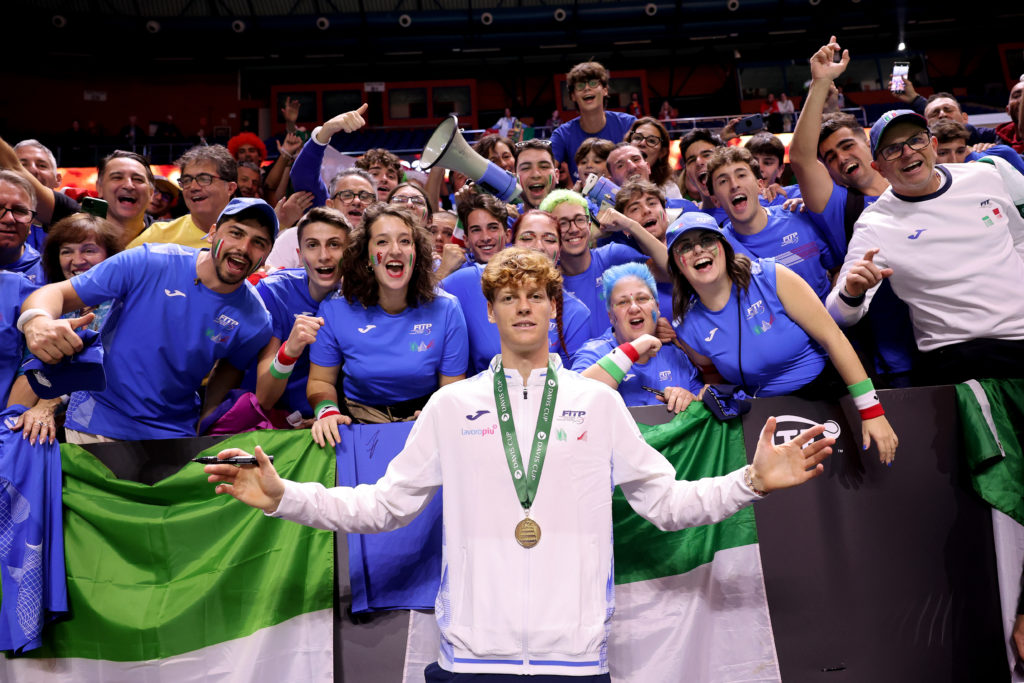
Andy Roddick says Italian tennis success is no ‘coincidence’
Italy’s recent tennis success reflects a strategic revolution in player development.
Years ago, Italian tennis leaders recognized the need for systematic change and invested heavily in nurturing talent at all levels.
They prioritized creating cost-effective pathways for aspiring players, offering countless opportunities through a dense calendar of Futures and Challenger tournaments within the country.
This approach helped limit the financial burden for lower-ranked players, allowing them to compete, gain points, and develop without the logistical challenges faced by players in larger countries like the U.S.
Andy Roddick, reflecting on this, noted: “This is not a coincidence that Italy wins the BJK and the Davis Cup. It’s not a coincidence. Years ago now they were like okay how do we tackle player development. I don’t know if it’s something we have got right in this country [America] for a long time.
“How do we do it? Let’s start with a lot more opportunities for success. For futures, challengers and people who are trying to make it in a very cost effective way. We are going to stack our country which is smaller than states in America with plenty of opportunity and that mitigates cost.”
Highlighting the logistical and financial difficulties lower-ranked players suffer, Roddick continued: “A lower ranked player having to fly from Florida, to New York, to Texas to California, that gets expensive very quickly and that’s not even that easiest way to get points as an American. You have to fly overseas to play a challenger in Sri Lanka which may have a watered down field.
“Props to them because what has happened is not an accident. The right decision has been made, the right investment has been made. Italy is the toast of the tennis world. It starts with Sinner and goes on down.”
Italian tennis is a dominant force across all ages
Italy’s rise as a tennis powerhouse has been the result of a well-rounded and systematic approach to talent development and fostering excellence – as Roddick says, it’s certainly no coincidence!
Over the years, the Italian Tennis Federation has heavily invested in training infrastructure, coaching quality, and support for players across various levels of competition. It’s an approach that has cultivated a generation of players who excel across both surfaces and formats.
Italy also benefits from a strong domestic circuit and state-of-the-art training centers that provide players with a consistent pathway to success. These investments in grassroots development have allowed young players to transition smoothly to the professional level, resulting in a sustained pipeline of top-tier talent.
While Sinner grabs the headlines, Italy have close to ten male players in the top 100 and have more coming through.
Paolini, 28, has properly broken through this season, despite being a slightly older player than the rest of the top 10. Making significant strides in both singles and doubles, the Italian is currently the only player – male or female – to currently be ranked in the Top 10 in both singles and doubles.
Her doubles partner Errani has been on the WTA Tour for close to 20 years and yet has totally rejuvenated her career this year by completing the ‘Golden Slam’ this year after securing the Olympic’s biggest prize.
Receive exclusive tennis news and updates twice a week to your mailbox