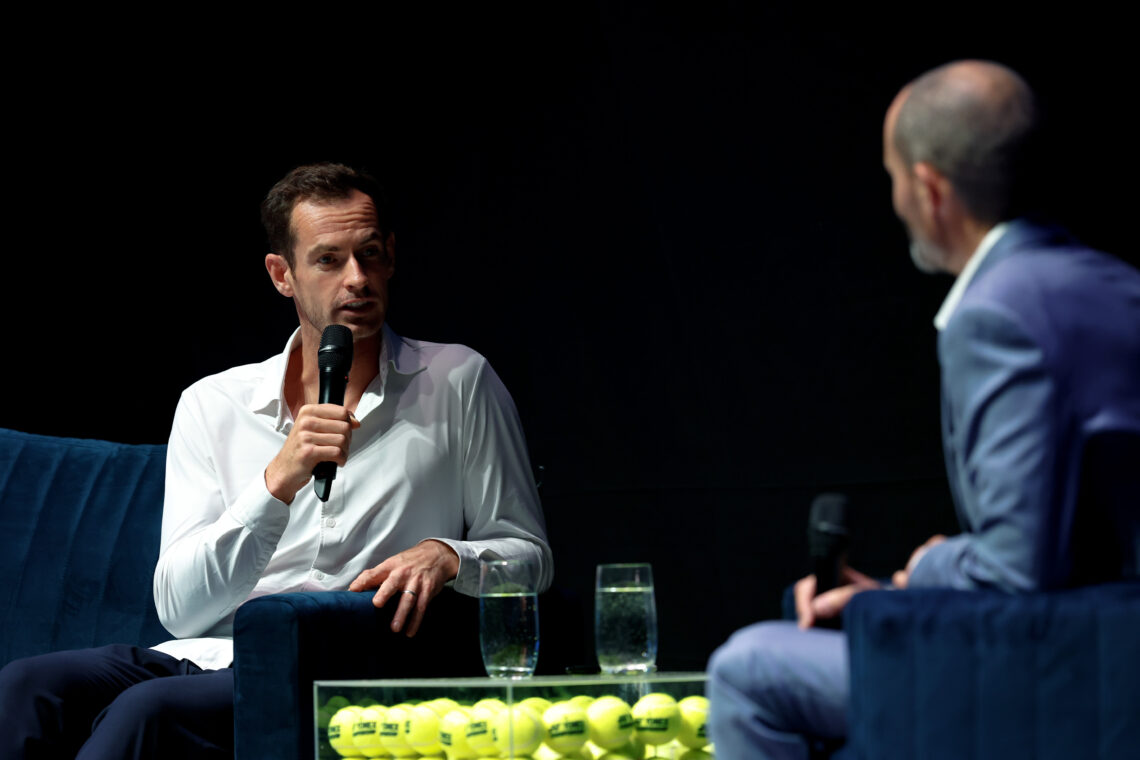

Andy Murray may have retired from tennis last year, but he has been anything but absent from the sport.
After all, he kickstarted 2025 with the bombshell news that he would be coaching Novak Djokovic, and has continued to remain relevant even after their split in May.
Now appearing on podcasts to voice his views on the current state of tennis, it’s clear that, whilst he might be enjoying retirement, the Scotsman is still itching to stay involved in any capacity.
He has now revealed his thoughts on one of tennis’ most controversial topics, even claiming that he voted against one of the sport’s biggest changes this year.
Andy Murray questions the tennis schedule
Speaking to The Tennis Podcast, he was asked about the relentless nature of the schedule and how he found it as a player.
His answer was incredibly insightful, having seemingly only realised in his retirement that the tennis calendar did not need to dictate his life.
Andy Murray admitted: “It’s a regret of mine that as a player, a lot of them just follow what the schedule says that you have to do.
Would you consider Andy Murray a top 10 player of all time?
“Novak is a good example of that this year, where he has not done that, and at times Federer did not do that. You are allowed to miss tournaments. Obviously, there are certain penalties in place for that. There is a bit of a balance to it.”
Then touching upon the two-week Masters events, which have drawn particular scrutiny, the former British number one revealed: “I was sitting on the ATP Player Council when this got voted for, to change the Masters series to longer events. I was completely against that change, because one, I liked the Masters series how they were. They were great events.
“And the feeling from the ATP at the time was that there would be less injuries because you would have more time to recover between matches.
“But my feeling was that if you put a two-week tournament on, there is less time for players to actually recover as well.

“I think part of the issue now is where I don’t think there is anything that suggests that players are getting injured more than before. I think there has always been injuries and I don’t think that there is evidence to back that up.”
He concluded by stating: “But I do think that players are more tired and I think mentally are more fatigued than they were before, because they are spending more days away and more days on the road and when you are more fatigued, you are more sensitive to pain and discomfort.
“My feeling is that is what players are feeling now. It’s that you are just being away and being on the road for longer than you used to be, rather than the matches are physically so much more demanding than they were 10 or 15 years ago.
“But it’s the amount of time that players are out on the road that is actually an issue.”
What have other players said about the two-week Masters schedule?
Murray is not the only notable figure to have voiced his displeasure over this huge scheduling change.
Novak Djokovic was another who condemned the move, claiming earlier this year: “To be quite frank with you, I don’t enjoy the two-week Masters events anymore. It’s just way too long for me. My focus is mostly on the Slams, and I have said that before.”
Who is the greatest male tennis player of all time?
Alexander Zverev echoed that sentiment in August, adding: “I am not a fan of where this is going.”
Jack Draper even called on other players to take a stand against the ATP, such was his view on the matter.
It feels like there is barely anybody on tour who is a fan of this change; however, it seems like it will be here to stay for at least the foreseeable future.
Receive exclusive tennis news and updates twice a week to your mailbox